Case studies and technical walkthroughs
See project cards, rotating galleries, and full implementation details.
Open Projects subsection
I speak Persian natively and English at roughly B2–C1 in speaking and B1–B2 in writing, and I’m continuously improving my English as I plan to work with both local and international teams.
My name is SeyedAli Emami, I’m 19 years old, and I live in Tehran, Iran. If I want to describe my path honestly, I would not describe it as a straight line. It has been a chain of obsessions that kept growing: first robotics, then websites, then product work, then Linux, servers, networks, security, and eventually the broader DevOps mindset of owning the full lifecycle instead of only one isolated piece of it.
I have always been the kind of person who gets attached to real systems. Not just the visible part. Not just the nice UI. I want to know how it is built, where it runs, why it fails, how it scales, how it is secured, and what happens when it breaks on a normal Tuesday at a bad time. That curiosity is probably the single theme that connects everything I have done so far.
What started as ‘I want to build websites’ slowly turned into ‘I want to be the person who understands the whole thing.’ That shift matters a lot to me, because it is the difference between making something look finished and making something actually work in the real world.
Long before I was thinking seriously about infrastructure, I was spending time around robotics, competitions, and hands-on building. I genuinely loved staying after school to wire sensors, motors, and controllers, or to debug code on a robot until it finally behaved the way it was supposed to. That environment taught me something very important very early: engineering is not about writing a beautiful idea on paper; it is about making a stubborn thing actually work.
I competed in events like FIRA Cup and STEAM Cup, and I won first place in an educational robotics Olympiad while also earning third place in the Soccer Player Hamster League at STEAM Cup Iran 2018. Those competitions were not only fun memories. They trained a mindset in me: break a problem into smaller parts, test each part, stay calm when something fails, and keep moving under pressure. Competitions can be brutal, but that brutality is useful. It forces you to stop pretending and actually solve the problem.
Looking back, robotics was probably my first real exposure to systems thinking. Hardware and software had to meet in the middle. Timing mattered. Reliability mattered. The environment did not care whether my explanation sounded clever; it only cared whether the robot could do the job. That lesson stayed with me and later showed up again in servers, deployments, and production systems.
This is why I never want the robotics part of my story to disappear. It was not some random childhood side note. It was one of the first places where I learned how engineering pressure feels, how debugging really feels, and how satisfying it is when many moving pieces finally behave like one system.
After that stage, I moved deeper into web development. At first, like many people, I experimented with website builders. But then I became more serious. I worked with WordPress, completed a formal 40-hour training course and scored 100/100, started coding in PHP, and later moved toward Node.js and Next.js for more modern stacks.
The important part is not the list of technologies by itself. The important part is what real-world web work forced me to face. Once you build for actual businesses, you cannot stay inside the comfortable fantasy that web development is only about pages and components. Suddenly you are dealing with slow websites, broken plugins, SEO concerns, caching problems, downtime, customer flows, operational mistakes, and the strange behavior that only appears when a system is used by real people and tied to real money.
That stage made me much less romantic about software in a good way. I learned that so many critical parts of engineering are boring on the surface but deeply important in reality. Performance, deployment, structure, monitoring, recovery, permissions, backups, stability, and security are not glamorous until the day they save the whole project.
In other words, the path from websites to operations was not accidental. Real web work naturally pushed me there. Once you care about the full product instead of only the code you personally wrote, DevOps starts to feel less like a separate specialty and more like an inevitable next step.
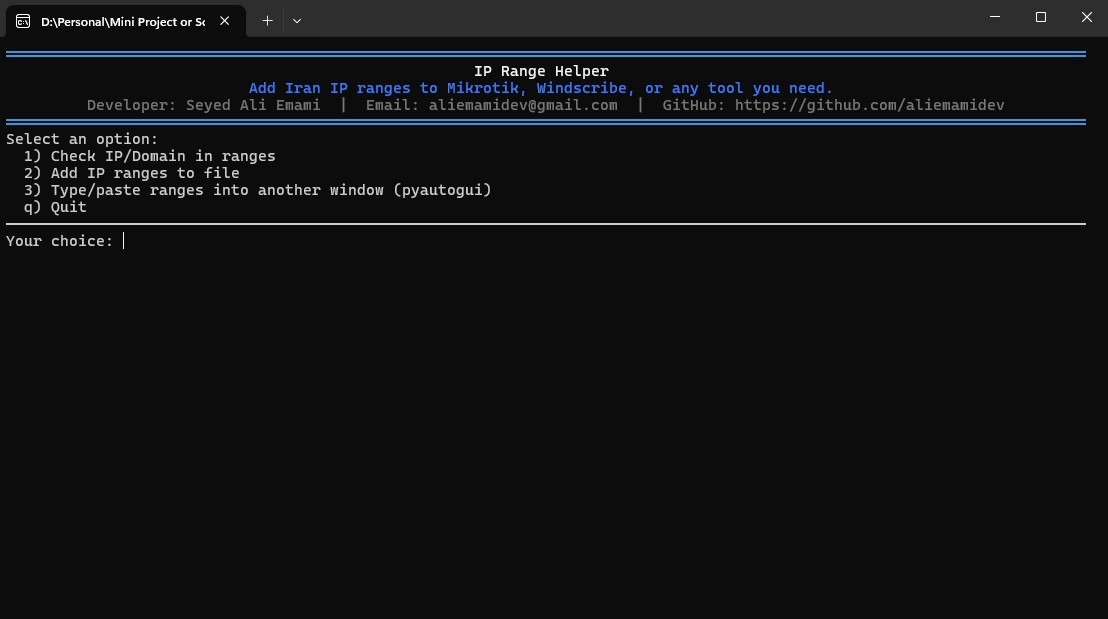
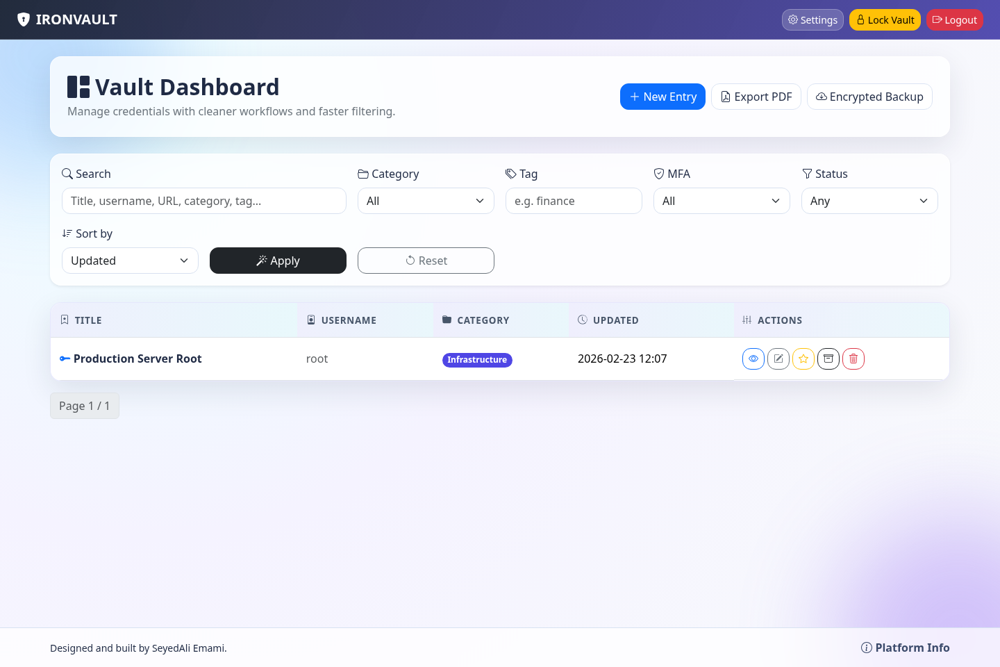
That full-lifecycle mindset later showed up clearly in projects like IP Range Helper, which is built around validating and automating Iranian IP range workflows, and IronValet, which turns secure credential handling into a practical operational tool instead of a vague idea.
As soon as I started deploying things myself, I hit the same wall that many developers eventually hit: ‘Okay, the code works on my machine. Now how do I run it properly on a server, keep it healthy, keep it secure, and trust it?’ That question changed my direction a lot.
I went through A+ and Network+ level material, started working as a Linux and server administrator, and then invested more seriously in DevOps. One major milestone was completing a 120-hour DevOps Administration Pack course at Samatak Institute, taught by Arash Foroughi. Around the same time, I also explored operating system and security topics, including practical work with tools like Burp Suite. These were not just certificates for me. They represented a stronger shift toward understanding systems beyond the application layer.
Today, my strongest technical comfort zone is Linux on Ubuntu and Debian, especially the day-to-day work that keeps servers alive: users, permissions, services, logs, systemd, troubleshooting, process thinking, and operational clarity. I am also strong in Docker and Docker Compose, solid with Nginx and Apache, and comfortable with practical security basics such as firewalling, hardening, and reducing avoidable risk in infrastructure.
I also try to be honest about where I am still growing. I understand CI/CD concepts, but I have not yet built the kind of complex pipeline automation that would make me claim deep expertise there. Monitoring and observability are similar: I understand the stacks and their purpose, but I am still intentionally strengthening my hands-on experience. I prefer this kind of honesty because I would rather be precise than impressive-looking.
I care about these two projects especially because they sit exactly in that middle ground I enjoy most: security, automation, operational clarity, and software that helps real teams work more safely.
A custom PHP-based platform for organizational food ordering where I handled core development and overall structure. This kind of project mattered to me because it lived at the intersection of product thinking, operational constraints, and long-term maintainability.
A C#-based customer club management tool with magnetic card workflows for charging and consuming credit. It gave me experience with desktop-oriented practical business software rather than only web-facing work.
An Android Studio project that reads SMS transaction messages and categorizes expenses. I like this kind of software because it turns messy real-world input into a structured user tool.
A focused Python-based credential handover tool designed to simplify secure username and password sharing inside teams or organizations. I saw it as a lighter, practical alternative to broader password managers for specific handover workflows.
A student-focused platform built with WordPress, WooCommerce, and Dokan where students could publish articles, sell educational products, and build a more central student hub. The idea won first place in the Ibn Sina student startup marathon and still matters to me conceptually.
One concrete example from my DevOps-style work was deploying a PHP-based platform behind Nginx with reverse proxy, using Docker for the application and MySQL, configuring SSL, container networking, and practical access lockdown. That was real infrastructure work, not shared-host style uploading.
At Rouhi Group, I moved from web platform technical leadership into leading the full technical delivery of RouhSaz, a production organizational ordering and operations platform. I own its architecture, implementation, deployment, reliability, and technical direction end-to-end.
At IranCook, I worked as a Web Platform Engineer and later CTO. I owned the e-commerce platforms, .NET internal systems, Python automation, MikroTik networking, servers, customer operations, and the technical coordination needed to keep a real business moving.
Alongside company work, I kept building side products, experiments, internal tools, and startup ideas. I learn fastest when there is a real constraint, a real need, and some consequence if the thing fails.
I studied Network and Software at Elm & Technique Technical High School in Tehran and was recognized as an excellent student for two consecutive years. I value that period because it gave me a practical technical foundation very early instead of treating technology as a purely abstract subject.
I spent two semesters there, but I eventually decided to leave because the value I was getting did not match my pace, standards, or goals. I do not see that choice as failure. I see it as a realistic decision about where my energy should go.
Right now, I am studying Computer Science in Tehran. I respect university, but I have never treated it as the only engine of growth. Most of my real growth has come from project work, responsibility, debugging, building, and self-driven learning.
I truly and deeply love helping students. Many students are under enormous pressure and a lot of them are genuinely struggling. The educational system in Iran is not healthy, and students are constantly affected by political tension, war, social pressure, instability, and many other things around them. I do not help students to show off or to add another line to a resume. I do it because it honestly makes me feel better, and in this period of my life it is one of the few things that makes me truly happy.
I am writing this part of the website with a simple hope: maybe more people will decide to help too. At the beginning, my dream was to build a startup that could genuinely help students. I actually started one. We built a platform for students in Iran where they could publish articles, sell their products, and discover their interests in one place. The idea won several awards, including first place in the SDGs SAGE competition for SDG4 and strong recognition in competitions like Ibn Sina, but unfortunately there was never real support to continue the work in a serious way.
Later I moved more toward teaching itself. I have taught in different places, but one place people may recognize is Allameh Helli 6, one of the well-known schools in Tehran and part of the SAMPAD system for gifted students. In my opinion the environment there is extremely intense. The academic pressure is very high and the whole atmosphere revolves around studying and competition. Even so, I was happy that I could share something meaningful with the students.
During one of my sessions there, I talked about Alan Turing and the early history of computers, and also Steve Jobs and the development of personal computing. The students were engaged, curious, and happy during the talk, and that made the whole experience meaningful for me. I have also tried to help in communities such as TeenoStars, where students get the chance to present their startups at ELECOMP, the largest technology exhibition in Iran. I want to continue this path and I would also love to write more about these experiences in the Blog section of this website.
What can I say — one hand alone cannot make a sound. I have met some amazing people along the way, and I try to help a little wherever I can. I still believe educational and student-centered work matters deeply. Hopefully, toward a happier future :)
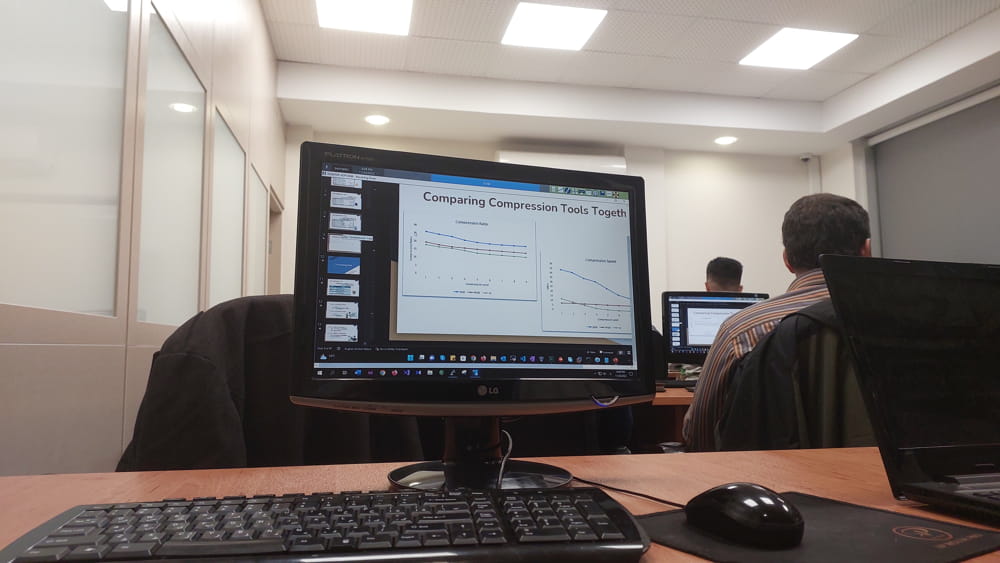
Ubuntu and Debian administration, user and permission management, services, logs, systemd, troubleshooting, and the kind of routine operational work that quietly keeps environments healthy.
Containerizing applications, defining multi-service stacks, networking services together, and running them in practical production-oriented setups.
Nginx and Apache configuration, virtual hosts, reverse proxy, SSL/TLS, and basic hardening for applications that need to behave well on real servers.
MySQL, PostgreSQL, and MongoDB setup, user configuration, and application-level usage. Not my strongest specialty, but fully inside my working range.
Virtual machines, networking, hosting providers, and practical cloud-related work without pretending I am already a senior cloud engineer.
Firewalling, basic hardening, understanding common vulnerabilities, and securing web applications and infrastructure at a practical level.
I understand the concepts and direction clearly, but I am still building deeper practical experience in complex delivery pipelines and automation.
I know what tools like Prometheus and Grafana are for and why they matter, but I am still intentionally getting stronger here.
Outside the core DevOps and web stack, I am also comfortable with several practical tools that have been useful in real projects and team work. I have a good level in Adobe Premiere and Photoshop, moderate template-based familiarity with After Effects, and a very strong working level with Microsoft Office tools such as Word, Excel, and PowerPoint.
I also have hands-on experience with sound equipment, audio setups, and basic AV configuration. I mention these things because they are part of how I actually work in the real world: I enjoy being useful across the full practical environment, not only inside one narrow software box.
I get bored when I am stuck inside only one repetitive task for too long. I like having multiple layers of challenge, and I like learning continuously inside real work rather than treating growth as something separate from the job.
Speed matters to me, but I do not respect fake speed that only creates future mess. I like moving quickly with enough structure and care that the result still deserves to exist.
I enjoy ownership, decision making, and shipping. I am not the kind of person who waits for perfect documentation, perfect clarity, or a perfect process before doing anything useful. I prefer to move, test, and iterate.
I enjoy working with people and I am not antisocial at all, but I also need quiet blocks of focus when a problem is difficult. I like teams that understand both collaboration and serious concentration.
The behavior of people matters to me a lot. I want serious teams, but also human teams. Respect, tone, and the way people treat each other are part of quality, not unrelated to it.
I am intentionally focusing on becoming a stronger DevOps Engineer and eventually moving deeper into Site Reliability style work while also building and running my own startups and side businesses.
I am not very interested in random freelancing. I prefer either working inside a serious, high-level, genuinely cool company where the environment and people matter, or building my own products and companies with real ambition.
At this stage of my career, my priorities are clear: learning first, then professional reputation and the quality of the people around me, then freedom and autonomy, then job security and long-term growth, and only after that pure money maximization.
My target roles right now are mainly Junior to Mid DevOps Engineer roles, especially part-time or flexible environments where I can keep growing technically while still pushing my own projects forward.