Iran / Digital Rights ·

The Bill Arrives Later: The Human Cost of Internet Shutdowns in Iran

Economic, educational, medical, and psychological costs continue after the signal returns.

By Ali Emami

The Bill Arrives Later: The Human Cost of Internet Shutdowns in Iran
The cost of an outage is not the number of unreachable hours. It is the missed customer, unpaid invoice, delayed shipment, cancelled class, interrupted record, and manual repair that follows. Iran’s online economy already operates through sanctions, inflation, filtering, costly workarounds, and unstable access. Many small businesses depend on a phone, messaging channel, social page, and payment link. A national shutdown removes several supports together.
A home business paused by a disconnected network
For a small seller, the social page may be shop window, catalog, support desk, and proof of activity. During a shutdown, the seller cannot confirm stock, payment, shipping, or delay; the buyer may simply leave. Home businesses and freelancers have no storefront or large reserve to absorb weeks without orders. Designers, developers, teachers, translators, and retailers may be ready to work while their customers, files, platforms, and payments remain unreachable. Associated Press reporting during the long 2026 shutdown documented losses across fashion, fitness, advertising, and retail. The missing video call is only the visible part. Students also lose papers, portals, cloud folders, scholarship forms, professor updates, and shared documents. An exam, visa, or application deadline may not reopen when service returns. The burden is unequal: students with tutors, international accounts, or alternate connections can compensate; others fall back to paper and informal networks.
A student using printed pages beside an offline laptop
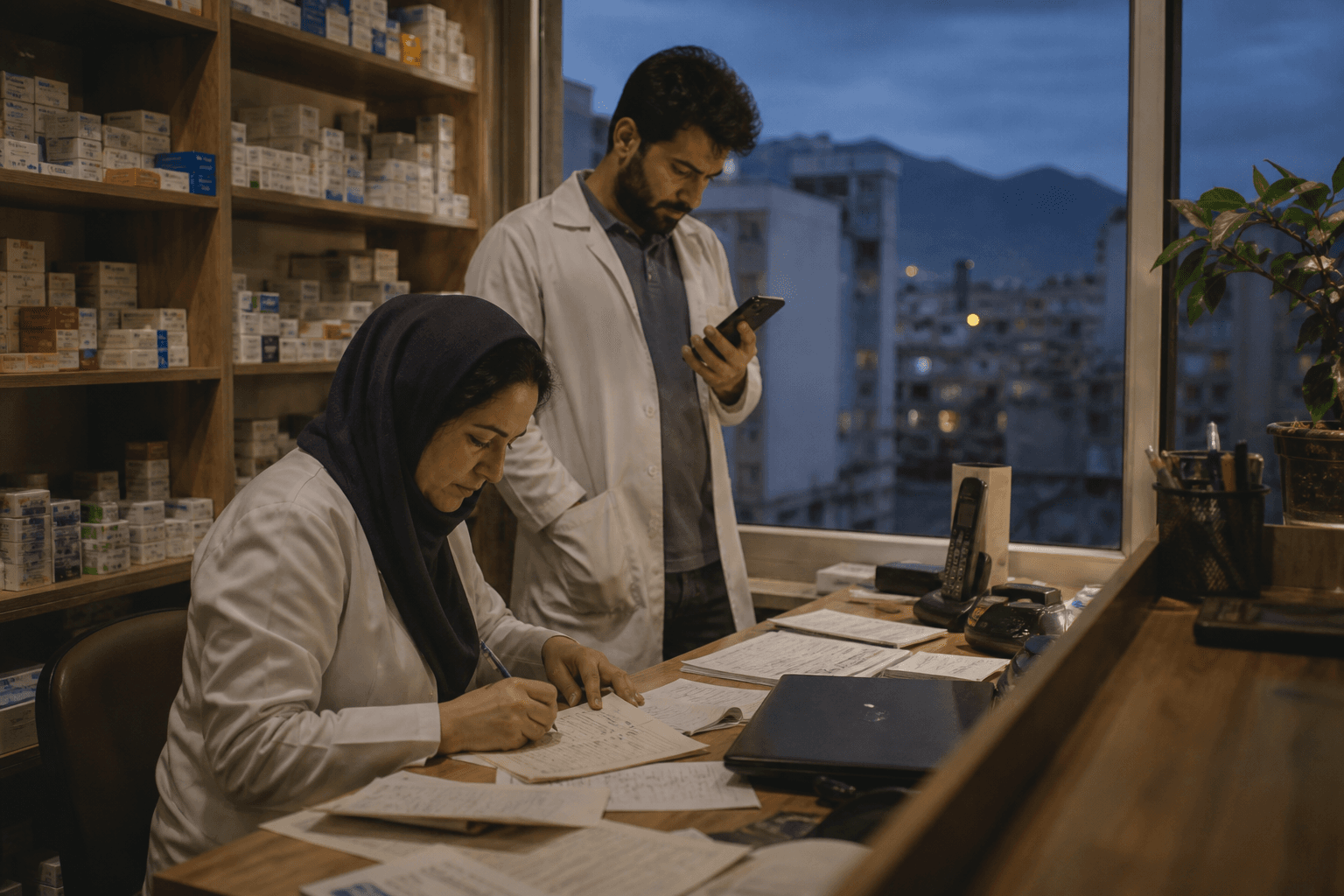
Pharmacies check stock; clinics coordinate appointments; doctors exchange records and results; families search for medication. Paper workarounds can keep work moving, but add duplicate records, transcription mistakes, missed updates, travel, and queues. Restricted access also narrows verifiable public-health information while rumors continue offline.
A pharmacy team using paper records
Multiple providers, extra devices, approved workplace access, relatives abroad, and paid workarounds are not equally available. Domestic services may remain reachable while international software updates, payment systems, developer tools, research, and customer channels disappear. The result divides people by both resources and geography. When traffic returns, devices are behind on security updates, backups are stale, queued messages and payments arrive out of order, and accounts may have moved to unsafe tools. Businesses reconcile orders; schools reconstruct work; clinics merge paper records. Restoration is the start of repair, not a reset. Security concerns during war are real, but a whole population is not one technical risk. Responsible policy requires:
  • a specific legal basis, scope, and end date;
  • public explanation and independent availability measurement;
  • continuous emergency, healthcare, education, and commerce access;
  • a review process for overbroad restrictions;
  • restoration plans covering updates, backups, and affected businesses.

Civilian connectivity is infrastructure. Cutting it transfers risk from a network to millions of people.
Share this post:

Continue

Recent notes