Iran / Connectivity ·

When the Internet Goes Quiet: Iran's Digital Life During War

How connectivity loss changes safety, work, verification, and ordinary coordination.

By Ali Emami

When the Internet Goes Quiet: Iran's Digital Life During War
“The internet is down” can mean a family message never arrives, a map fails, a call ends before anyone answers, or a payment sits between two screens. In wartime these failures connect: the network is the coordination layer beneath many other services. This is not a report about one night. It examines patterns documented around Iran’s June 2025 wartime shutdown and longer disruptions in 2026. Cloudflare Radar, Access Now, and other measurement groups show how throttling and selective blocking can become near-total loss of access.
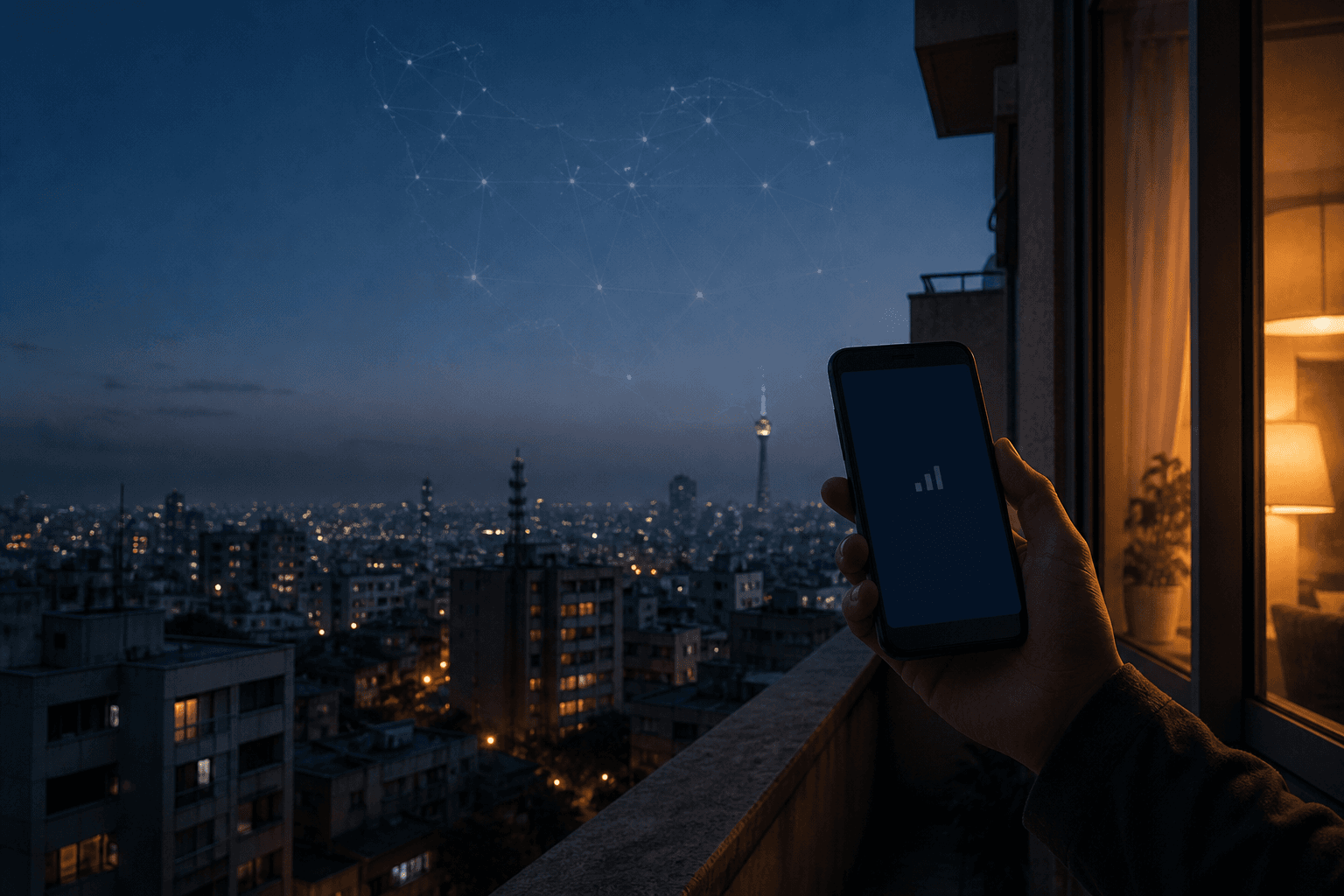
A disconnected phone above Tehran
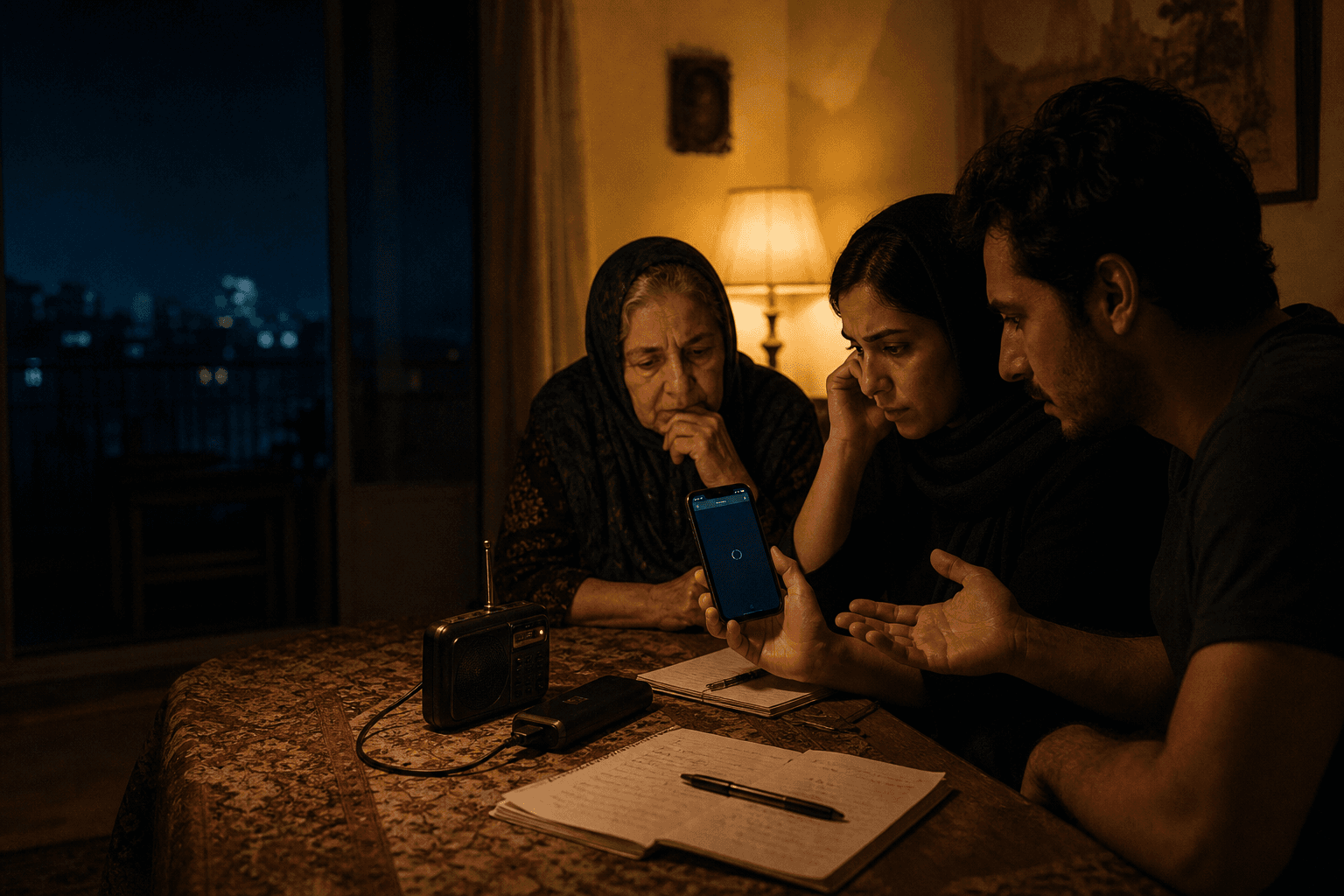
Families check a last message, share location, compare neighborhood reports, and ask one another: “Are you safe?” When the network becomes unreliable, nobody knows whether silence means a weak tower, blocked service, or danger nearby. People repeat calls, refresh, and switch apps because the distinction matters.
A family using a phone, radio, and notes
During a shutdown:
  • international services may fail while domestic ones remain;
  • voice, video, or encrypted traffic may become unusable;
  • provider, location, and protocol can change access;
  • mobile and fixed networks may behave differently;
  • occasional traffic can resemble restoration without reliability.
Partial access is especially confusing. A seller keeps retrying an order, a journalist waits to verify a report, or a parent assumes a reachable phone means a reachable message channel. Cloudflare measures traffic patterns rather than relying on impressions. Access Now documented 11 Iranian shutdowns in 2025 and described Iran as the region’s most frequent shutdown actor that year.
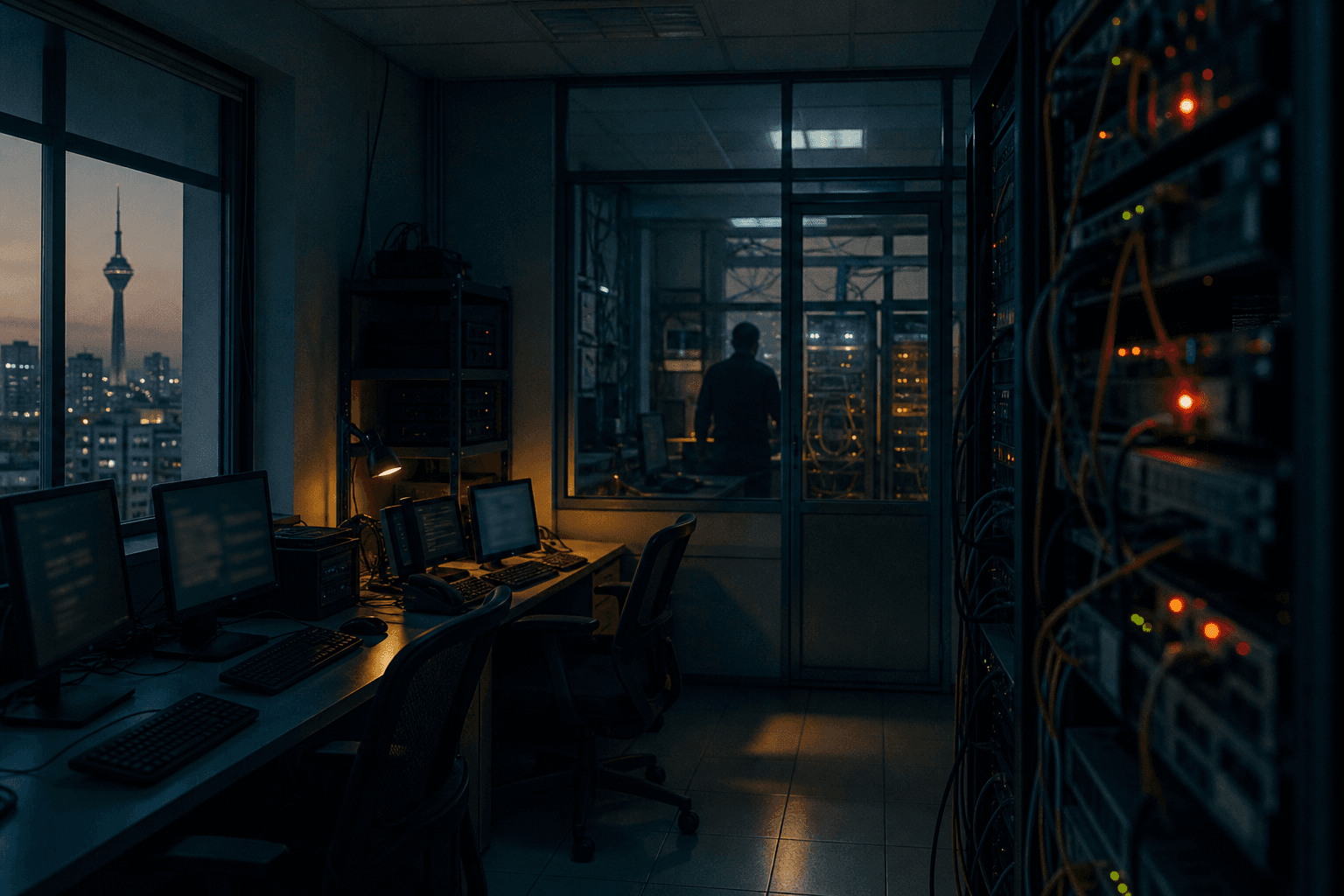
A network operations room during disruption
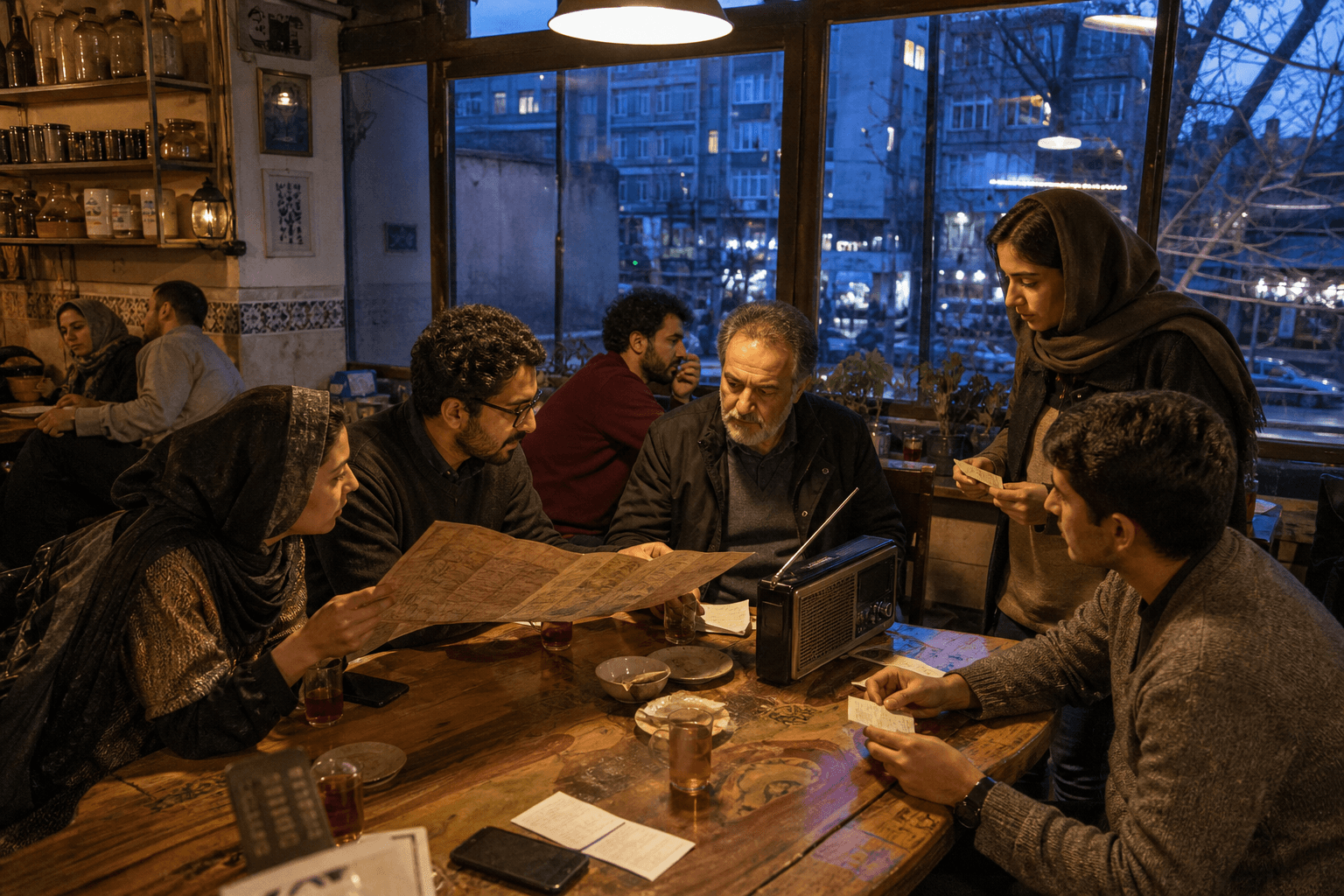
Radio, SMS, printed notes, neighbors, and surviving local services help, but rumors also travel offline. When independent reporting, international news, maps, cloud files, and outside contacts disappear together, people may receive many messages and still lack reliable knowledge.
People sharing a radio and printed notes
Daily life depends on small digital agreements: delivery windows, documents, school notices, medical reminders, bank confirmations, and work calls. Losing them hits people unevenly. Money, another SIM, a resilient workplace, or help abroad may provide a route around the outage; rural communities, older adults, disabled people, and separated families often have fewer options. Connectivity now supports care, mobility, commerce, and public knowledge. It is infrastructure, not a luxury. A crisis plan should provide:
  • clear, time-bounded notices about what is unavailable and why;
  • emergency channels that work without global access;
  • independent ways to verify urgent information;
  • offline maps, cached guidance, and accessible local announcements;
  • independent outage measurement and transparent restoration;
  • priority recovery for hospitals, education, small businesses, and families.

The aim is not perfect connectivity during war. It is preventing a restriction from becoming an information vacuum.
Share this post:

Continue

Recent notes