BlogMarch 29, 2026

Introducing IronValet: a secure credential handover system with real deployment paths

Why I like tools that care about setup, persistence, and operational reality as much as the interface.
SeyedAli Emami
Introducing IronValet: a secure credential handover system with real deployment paths
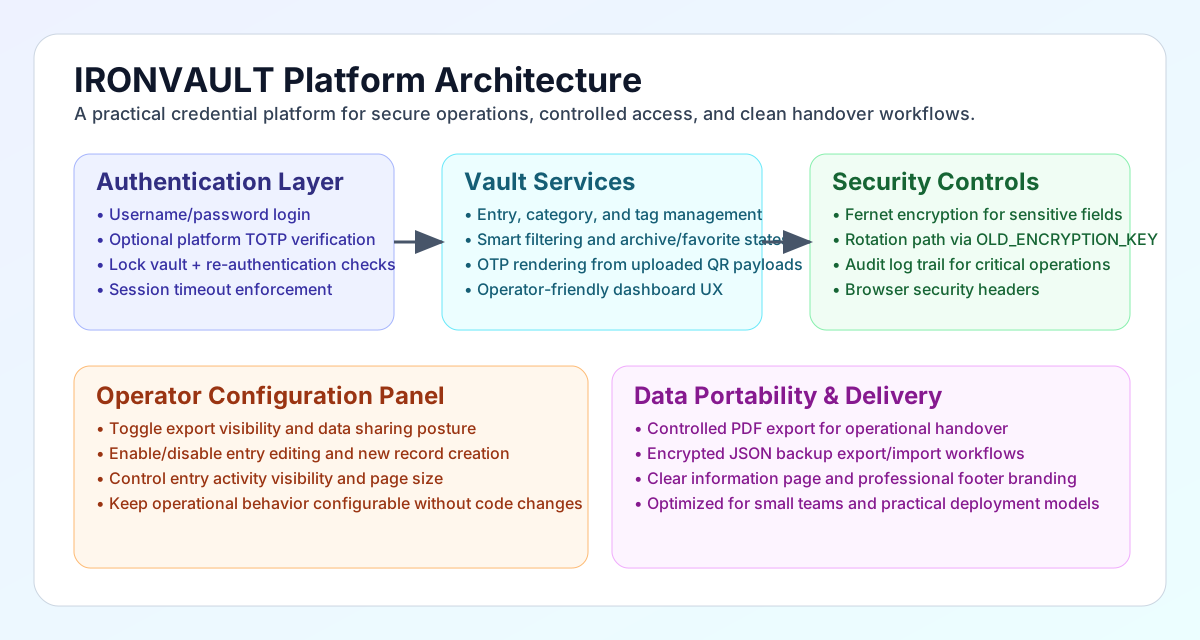
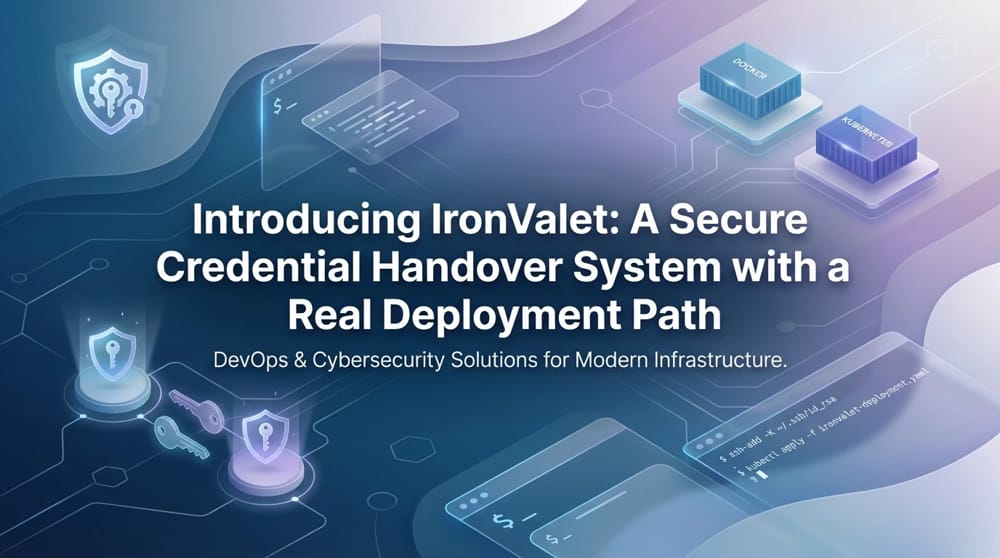
One of the product ideas I care about a lot is secure handover. In real teams, accounts and credentials do not always live in a neat theoretical workflow. Sometimes someone leaves a role, sometimes access needs to be transferred, and sometimes the challenge is not storing a password forever — it is handling a handover cleanly, intentionally, and with enough structure that the next person is not forced into chaos. That is the problem space behind IronValet, the portfolio-facing name I use for the project repository called IRONVAULT. IronValet project overview illustration When I read through the project documentation, the part that stood out most was not just the UI or the feature list. It was the fact that the system already thinks in terms of setup flow, runtime flow, portable delivery, and Docker deployment. That matters because so many internal tools die in the gap between “it works on the developer machine” and “someone else can actually run this safely.” The project uses start.py as a setup wizard. That one decision already removes a lot of friction. According to the documentation, it handles:
  • creating required directories,
  • generating .env with secure defaults if needed,
  • normalizing the SQLite database URL,
  • optionally applying migrations,
  • and optionally creating the initial superadmin account.
I like this a lot because it respects the fact that a secure tool should also be operationally friendly. Another thing I like about IronValet is that it does not assume every user wants the same delivery method. The documented flows cover:
  • direct local runtime for development or standard operation,
  • a portable Windows .exe path for delivery,
  • and a Docker deployment path for realistic server use.
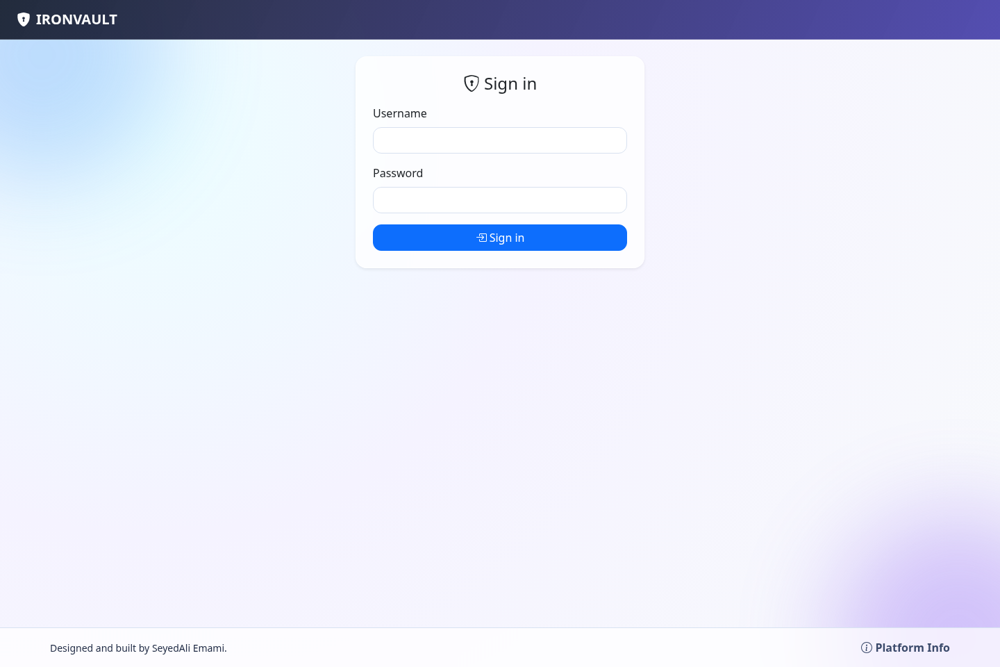
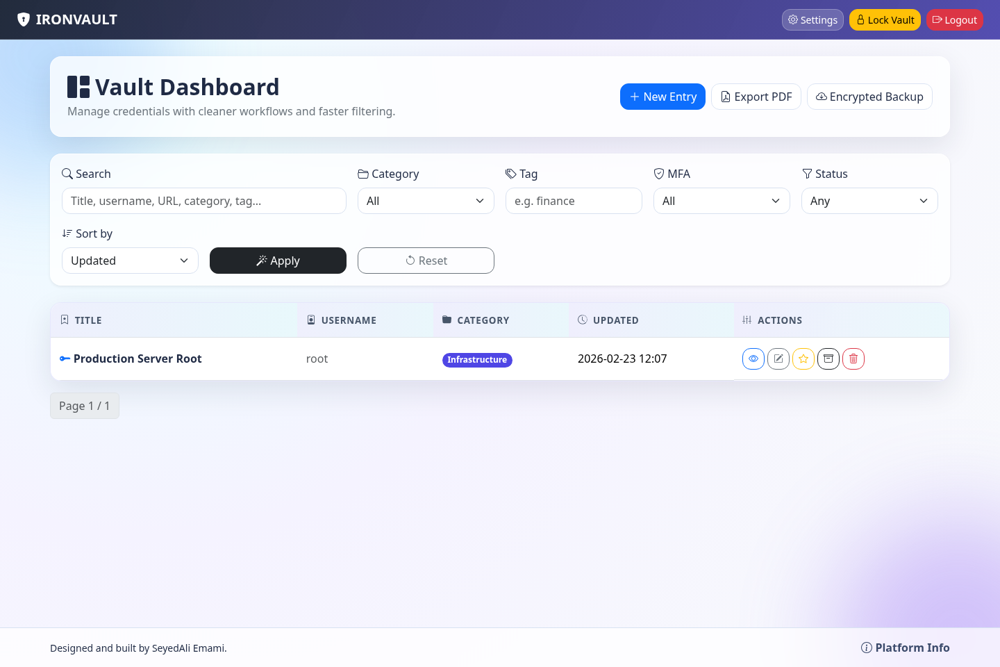
That flexibility turns the project from “a Flask app” into a tool that can actually travel between different environments. IronValet login screen IronValet vault list interface The Docker guide includes practical operational constraints and not just happy-path commands. It clearly explains that:
  • the app runs behind Gunicorn,
  • migrations run on container startup,
  • persistent data lives outside the image layer,
  • the documented Compose mapping uses port 5500 on the host,
  • and SQLite means the current deployment should remain single instance unless the database layer is upgraded.
That kind of honesty is exactly what I want in project documentation. I wanted this project on the website because it represents several things I care about at the same time:
  • secure product thinking,
  • operational clarity,
  • multiple delivery paths,
  • practical documentation,
  • and a system that is useful because of what it helps people do, not only because the interface looks polished.
That mix feels much closer to real engineering than a purely decorative project.
Open the full project page
Share this post: