BlogMarch 29, 2026

How to run IronValet with Docker or build it locally

A practical walkthrough of the documented setup paths behind IronValet / IRONVAULT.
SeyedAli Emami
How to run IronValet with Docker or build it locally
From the project documentation, IronValet / IRONVAULT supports two very practical ways to get started:
  1. local bootstrap + Flask runtime
  2. Docker-based deployment
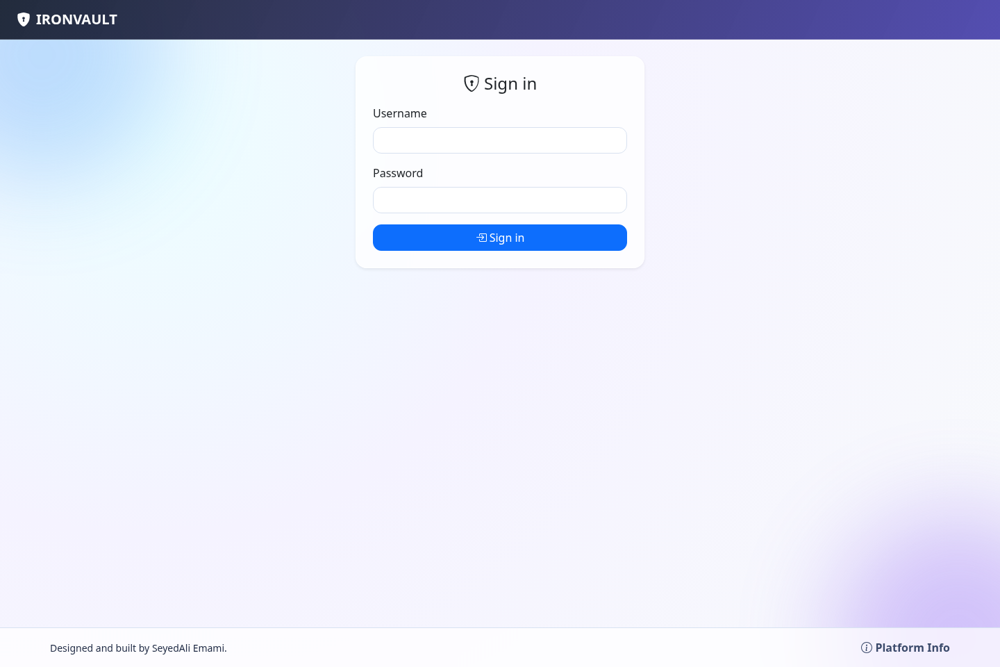
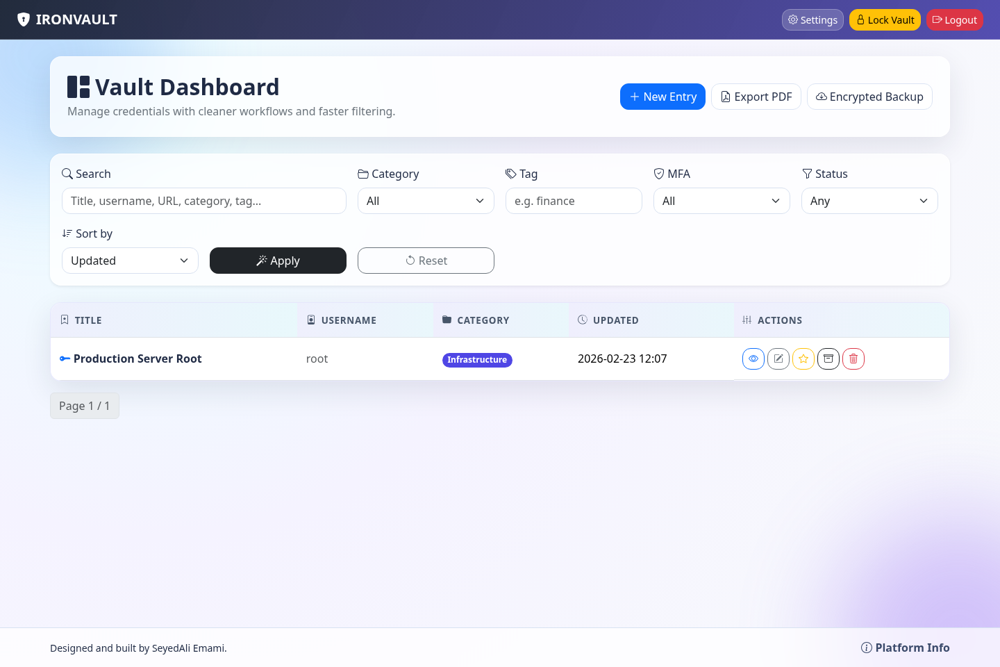
There is also a third useful option: building a portable Windows package for delivery. IronValet login screen This is the best path when you want to work directly with the project, test changes, or understand the setup flow in a more transparent way. The documentation describes start.py as the initial setup step. It prepares folders, the environment file, and database-related setup. After bootstrap, the documented runtime flow is straightforward: That makes local iteration easy while preserving the setup logic in a dedicated first-run script. IronValet vault list view This is the stronger option when you want a cleaner deployment model or a more production-oriented runtime. If .env does not exist yet, start from the example file and then replace the placeholder values with real secrets. The documentation specifically calls out values such as:
  • SECRET_KEY
  • DATABASE_URL
  • VAULT_ENCRYPTION_KEY
  • SECURE_COOKIES
and explains that the SQLite URL is intentionally kept relative for portability. If the admin does not exist yet, the documented command is: There is also a delivery-focused path for Windows environments where a self-contained package is more convenient than a Python-based runtime. The documented output folder is: The documented persistent paths are:
  • ./instance/ironvault.db
  • ./uploads/
  • .env
That is a good backup boundary because it captures both the application data and the secrets/configuration needed to restore the environment. What I like about this setup is that it gives you a clean answer whether you want to:
  • develop locally,
  • deploy with Docker,
  • or hand over a portable Windows package.
That flexibility is exactly what makes the project feel operationally mature.
Back to the IronValet project page
Share this post: