BlogAugust 10, 2026

When the Internet Goes Quiet: Iran's Digital Life During War

A field note on how wartime connectivity loss changes communication, safety, work, and the meaning of being online.
SeyedAli Emami
When the Internet Goes Quiet: Iran's Digital Life During War
When people say that the internet is down, the sentence sounds smaller than the experience. It can mean a message that never arrives, a map that cannot load, a video call that stops before a family member answers, or a payment that remains stuck between two screens. During wartime, those small failures become connected. A network outage does not remove one service at a time; it removes the layer that helps many other services coordinate. This is not a live incident report about one specific night. It is a closer look at the pattern documented around internet disruptions in Iran, including the wartime shutdown reported in June 2025 and the much longer nationwide disruptions documented in 2026. Cloudflare Radar, Access Now, and other measurement groups have shown that these events can move from throttling and selective blocking to near-total loss of access. The important part is what that technical change does to ordinary people.
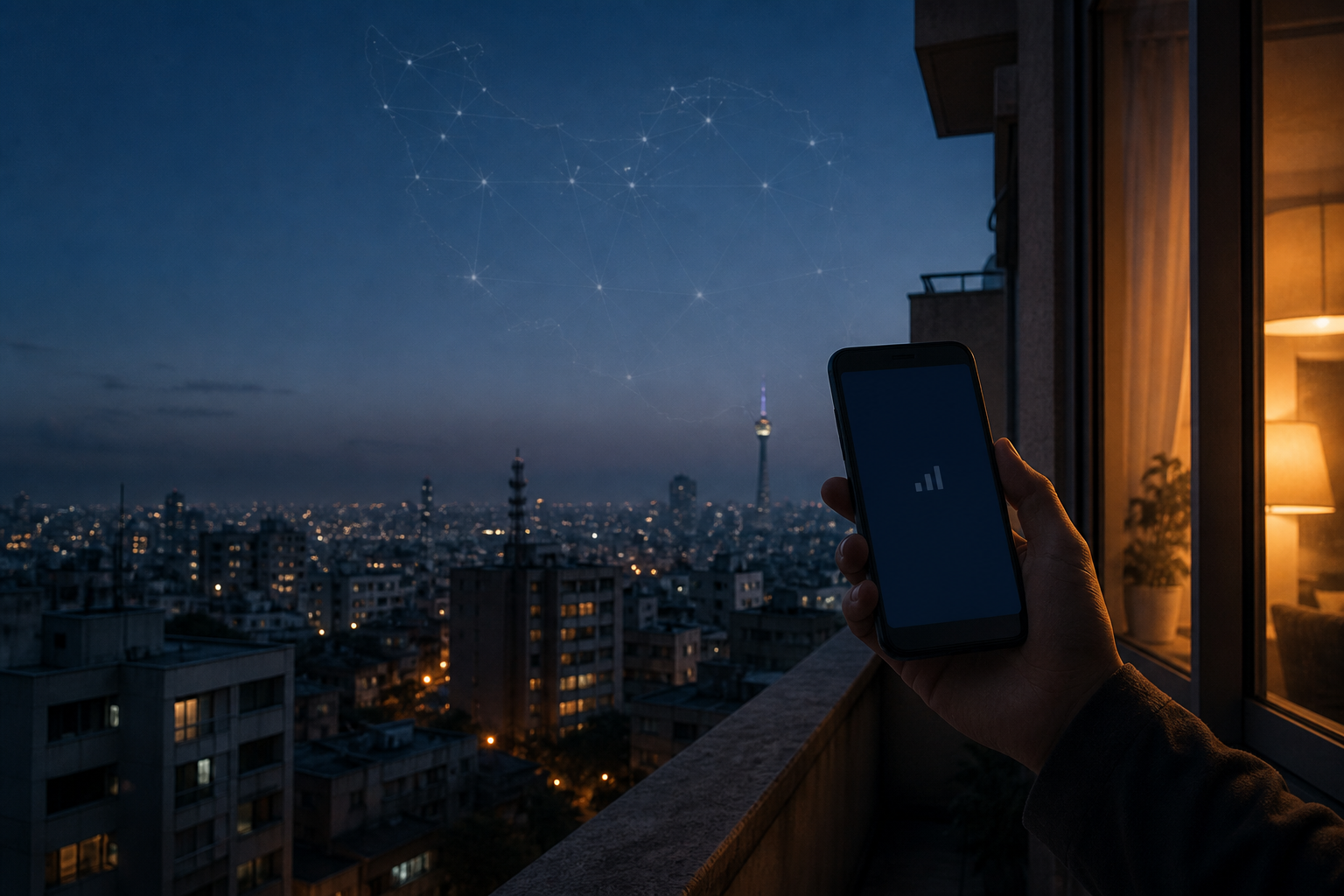
A phone with no connection above Tehran at dusk
The first question is rarely “Can I open a website?” It is usually “Are you safe?” Families use the internet as a distributed safety net. They check a relative’s last message, share a location, look for a local update, or ask someone in another neighborhood what they can see and hear. When the network becomes unreliable, the emotional gap grows faster than the technical one. A person may still have electricity and a working phone, but no reliable way to know whether a message failed because of a weak tower, a blocked service, or a dangerous change nearby. That uncertainty is exhausting. People repeat the same action—refreshing, calling, switching networks, trying another application—not because they expect a different interface, but because silence has consequences. A delayed message can be an ordinary delay. It can also be the only sign that someone needs help.
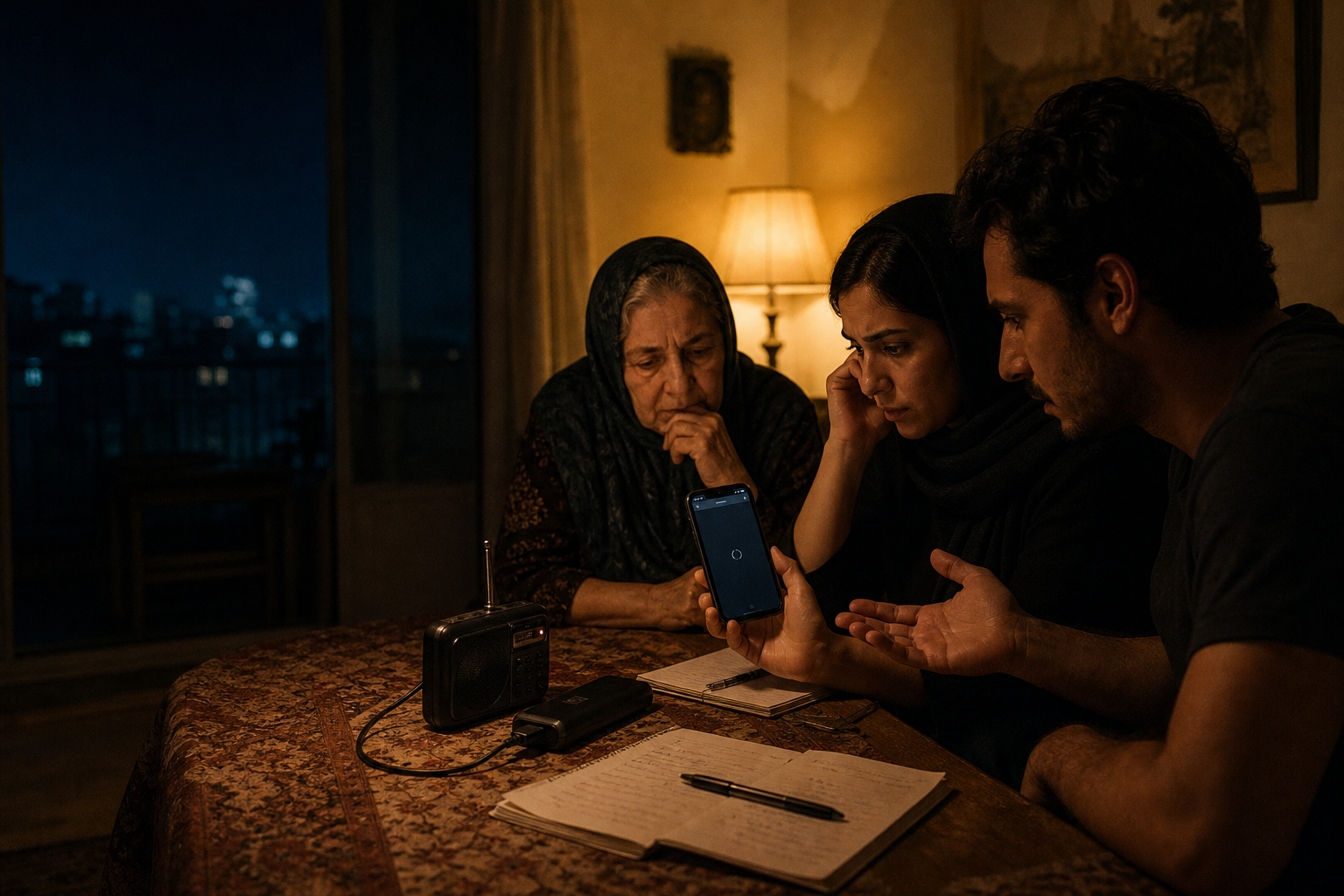
A family using a phone, radio, and handwritten notes during an outage
A shutdown is not always a clean switch from “online” to “offline.” People may experience several layers at once:
  • international services stop working while some domestic services remain available;
  • a connection exists, but video, voice, or encrypted traffic becomes unusably slow;
  • a service loads for one person and fails for another because access is being filtered by provider, location, or protocol;
  • mobile data and fixed-line connections behave differently;
  • a small amount of traffic continues, creating the impression that the network is coming back when the global connection is still mostly unavailable.
That distinction matters because it changes how people make decisions. A business owner may keep trying to send an order. A journalist may wait for a page to load before confirming a report. A parent may believe that a phone is reachable even when the message channel is not. Partial access can be more confusing than a complete outage because it produces occasional success without reliability. Cloudflare Radar’s Iran pages are useful precisely because they measure traffic patterns rather than relying only on personal reports. Access Now’s shutdown reporting also places individual incidents inside a wider pattern: the organization documented 11 shutdowns in Iran during 2025 and described the country as the region’s most frequent shutdown actor that year.
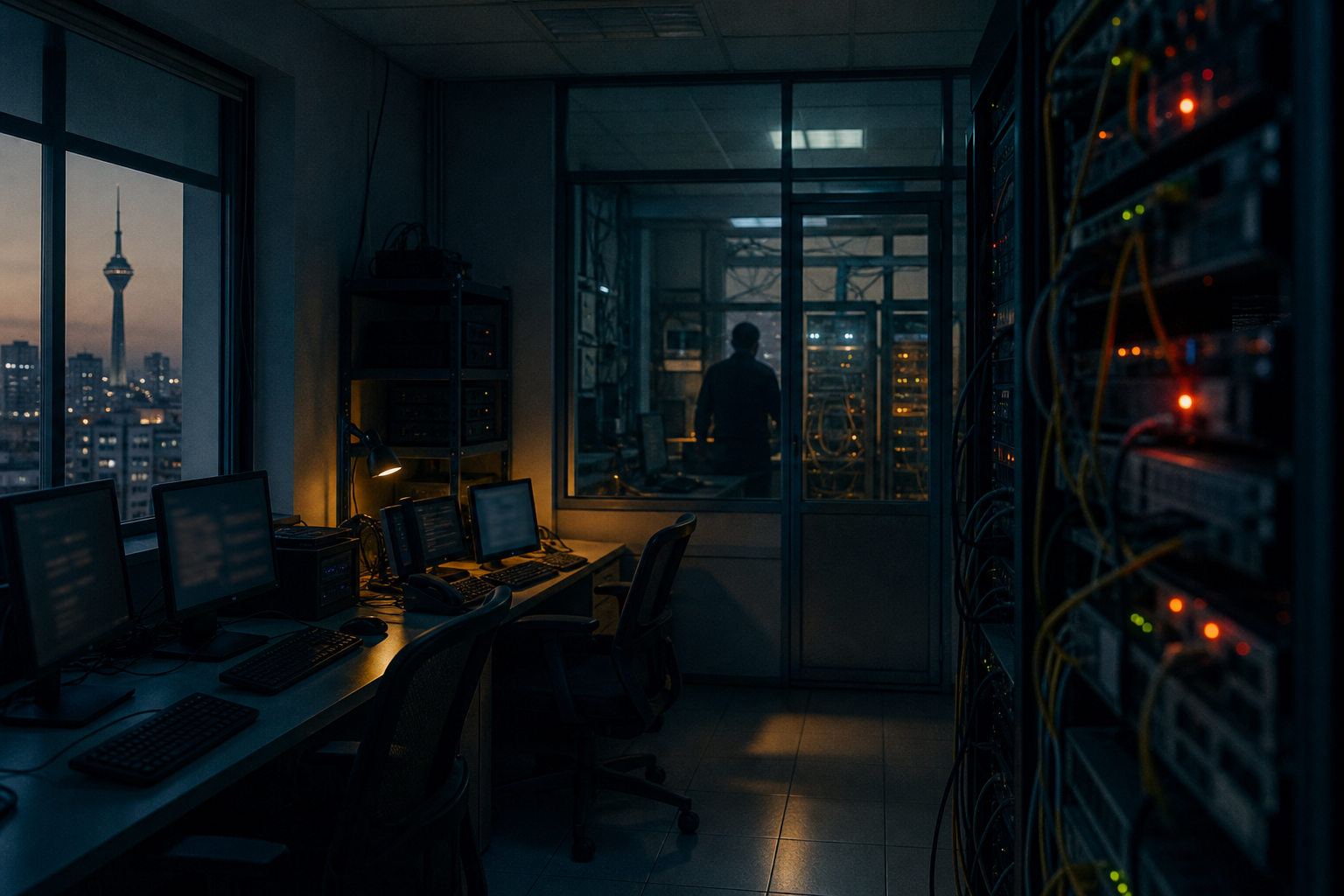
A quiet network operations room with warning lights during a disruption
In a crisis, people need information that is fast, local, and independently checkable. A restricted network can make all three harder. People turn to radio, SMS, printed notes, neighborhood conversations, and whatever local services still function. These alternatives can be valuable, but none of them automatically solves the verification problem. A rumor can travel offline just as quickly as it travels online; it simply leaves a different trail. The risk is not only that people receive less information. It is that they receive a narrower information environment. When independent reporting, international news, mapping tools, cloud documents, and direct contact with people outside the country are interrupted at the same time, it becomes harder to compare accounts. A population can be surrounded by messages and still lack reliable knowledge.
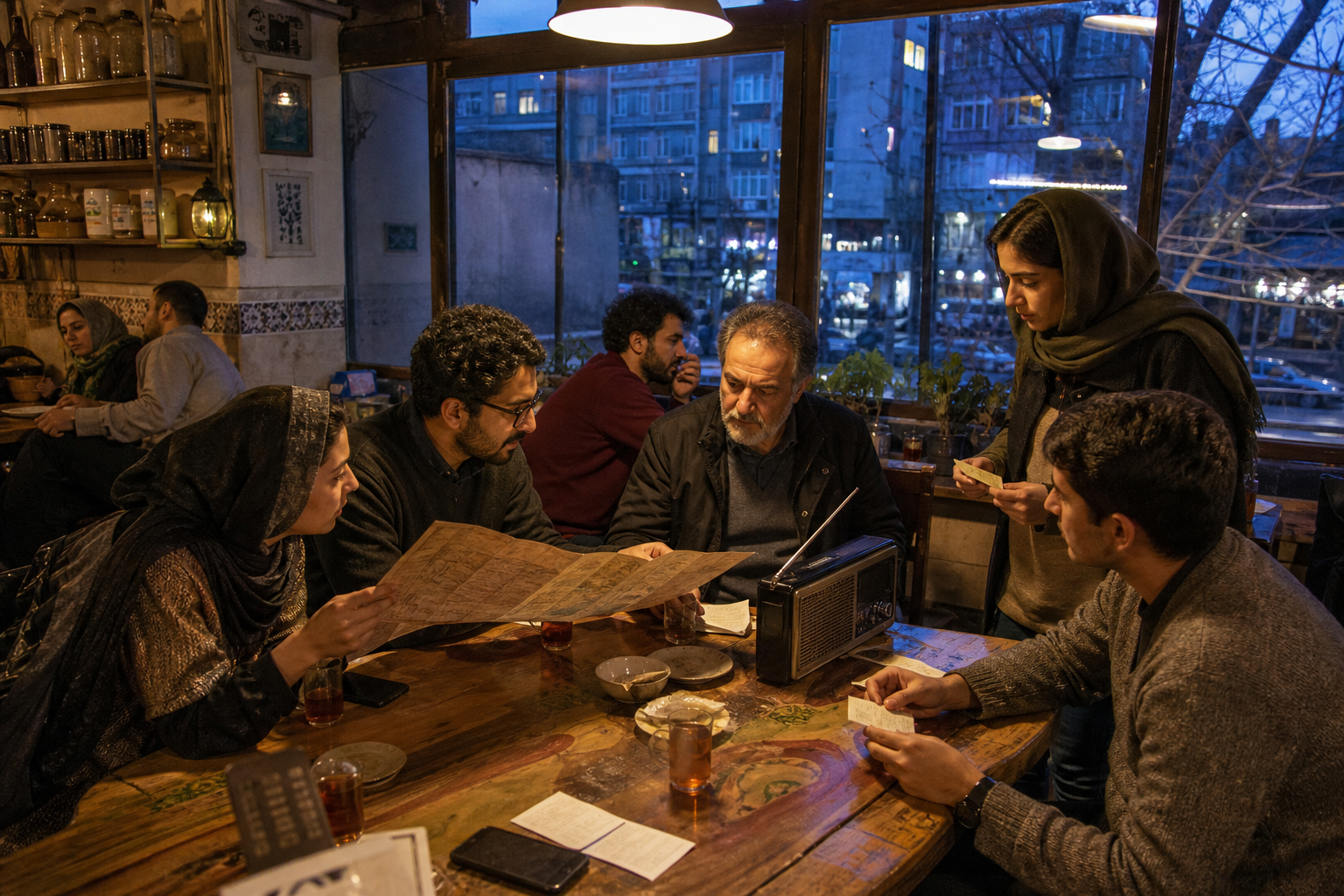
People sharing printed notes and a radio in a neighborhood cafe
Modern life is coordinated through small digital agreements: a delivery window, a shared document, a school announcement, a doctor’s reminder, a bank confirmation, a work call. During war, coordination is already fragile. Removing the network adds friction to every handoff. That friction does not land equally. A person with money, a second SIM card, access to a resilient workplace, or a trusted contact abroad may find a workaround. Someone in a rural area, a person with a disability, an older adult, or a family separated across cities may have far fewer options. The same outage therefore creates different levels of risk for different people. This is why “the internet” should not be treated as a luxury that can be switched off without collateral damage. It has become part of the infrastructure of care, mobility, commerce, and public knowledge. Resilience is not the same as asking people to improvise forever. A better crisis communication plan would include:
  • clear, time-bounded public notices explaining what is unavailable and why;
  • reliable emergency channels that remain reachable without a global internet connection;
  • multiple independent ways to verify urgent information;
  • offline maps, cached public guidance, and accessible local announcements;
  • transparent, independent measurement of outages and restoration;
  • restoration plans that prioritize hospitals, education, small businesses, and family communication.

The goal is not perfect connectivity in an imperfect situation. The goal is to prevent a technical restriction from becoming an information vacuum. During war, people already have enough uncertainty to carry. The network should not make them carry silence as well.
Share this post: